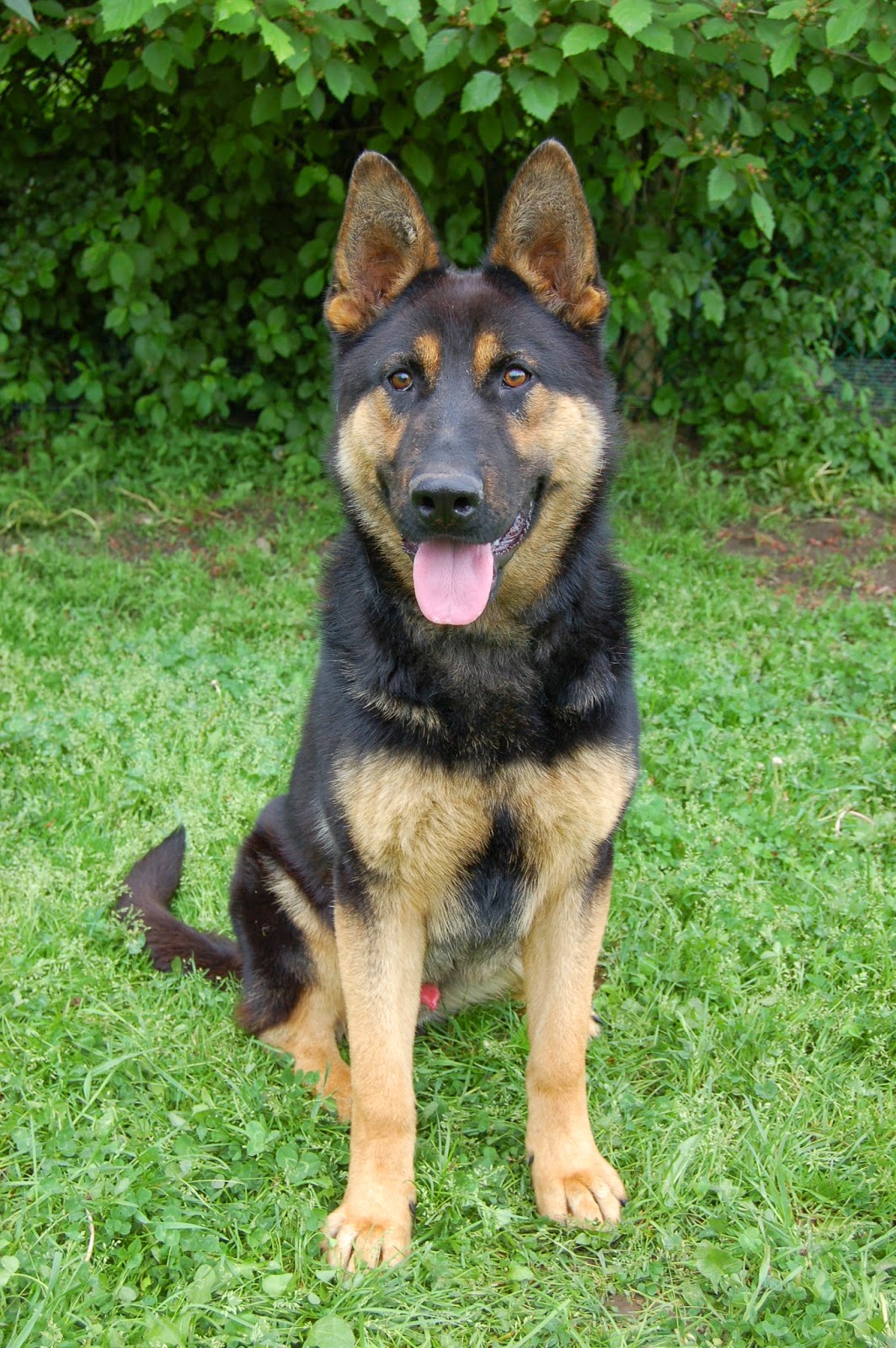
Showing posts with label German Shepherd for sale. Show all posts

Wednesday, May 20, 2015

The GSD Police Dog

Introduction to the GSD 

A PSD’s job has underwent a drastic change:
• Either it is a part of the K-9 Team involved in Search and Rescue missions in rural areas, or
• Part of a specialty unit involved in apprehension of armed suspects on the run in an urban are, or
• Somewhere in between the two! 
Throw drugs, explosives and a myriad of modern ways crime is committed today and you end up with a range so diverse that the modern GSD finds difficult to breach.

A Sorry State of Affairs

It is traditional to choose canines bred as working dogs as PSDs, which has created a huge demand for GSDs, Malinois, and Dutch Shepherd varieties from countries, like Holland, Germany, and Belgium. Unfortunately, the increased demand has in no way increased production of serviceable German Shepherds. Plummeting numbers of GSDs as PSDs tell the story all too well! 
Theories abound for this failure. Some of them are mentioned as follows:
• The GSDs are now primarily being bred for the show ring with not much attention given to presence of working traits in the breeding stock.
• Sport’s failure in weeding out the less desirable characters from the gene pool.
• Less than optimal selection in the Korung:
lack of fighting instinct, absence of play drive evaluation, or Schh scores used to qualify a breeding candidate.

GSDs Lose Their Status

The once sought after GSDs are being passed over by handlers in face of the demand from many agencies for alternate breed PSD's. This has occurred mainly due to two reasons:
• Few individual GSDs now have sufficient drive that enables them to excel at duties of a PSD.
• Additionally, diverse environments and a variety of tasks now involved with PSDs has made things complicated. We expect the PSD to work with SWAT Teams. In such cases, small security deficiencies, minute changes in sound sensitivity, as well as, the changing nervous threshold can lead to huge prices being paid.

Demand for Control

Society, today, demands the PSD be controlled and the handler — and other concerned parties — be safe while in pursuit of armed/violent suspects on the run from the law. This had led to increased demands made over the temperament of the PSDs, as well. A controllable canine is the result of more than just training, it also requires the animal in question to be tough and brave, — all of which used to be synonymous with the GSD in the past.

A Need to Evolve

Scent training now incorporates areas, which had not been required of a GSD previously. 
• Learning to differentiate between the suburbs and urban areas is one such area. The GSDs must be able to search uneven terrains, as well as, maneuver through crowded areas and be able to pick a scent from the multitude of smells in such areas. 
• Other new things to learn for the GSDs were sniffing out drugs — storage, import or even distribution —, body dumpsites, suspected arson etc.
• Recreational areas in the wilderness have also added to the load of the GSDs since people who take off to these areas often require rescuing.
• Worldwide threats — whether precipitated by natural disasters or terrorist attacks have further extended the list of things to learn.
However, scent work through training has not yet been standardized. Producing a progeny trained in this type of work is thus difficult. I have heard that the German Police has considered addition of retrieval exercises to the Korung for breeding candidates; however, a corresponding test has yet to be added by the SV. Such a test would have a wide range of applications.

Solution to the Plight of GSDs

Working Show-dog supporters insist that all trained dogs must be on par with the standards of the show they are running. On the other hand, breeders insist that will damage the GSD stock even further. Once we have come to accept that there is a problem that requires solving, we can see both sides of the picture. Let us examine possible solutions:
• Follow the German Police, Northrhine-Westfalia’s lead. Development of breeding programs for both GSD, as well as, the unregistered Malinois dogs from out of Holland. With the common aim i.e. provision of well-bred and healthy PSDs, the state now breeds the lion’s share of PSDs currently in use. In the U.S., though the local law enforcement relies too much on the products of imports or the result of hobby breeders.
• Max V. Stephanitz introduced the GSD only because of its working ability. Candidates chosen to be included into the ranks of PSDs should be strictly checked. Animals that do not meet the mark should be rejected, even if that means all the GSDs are declared unfit for the job!

GSDs in Danger

The GSD make excellent:
• guide dogs for the blind,
• search and rescue dogs
• protectors of homes
• companion dogs


However, their pièce de résistance has always been their excellence in the police canine arena. Other breeds traditionally used to herd cattle may be much better at their job than the GSD but nobody beats them at police work. With demands of appealing physical appearance flooding in, the entire picture could change! Law enforcement might give up on GSDs entirely, turning them into lapdogs for the wealthy and eccentric which is entirely against the GSDs nature. Read more www.ccprotectiondogs.com

Tuesday, April 21, 2015

Why Invest in a Personal Protection Dog

In an era of security alarms and monitoring homeowners may think they are protected from danger thanks to electronic devices.

This isn’t always the case with criminals becoming more tech online systems,savvy and hacking technology on the rise.
    
Protection from a highly trained dog can offer more security than any device can. They are effective, on-site protection that tells would be intruders or other criminals that they are being watched and will be stopped.
A select breed of dogs known for their exceptional protection qualities are available including German Shepherds, and Belgian Malinois dogs. These dogs are highly trained in defence measures to protect you and your family.

Nearly 70 per cent of people who choose CCPD are women. This is because a dog can be an excellent personal protection from attack or predators.
CCPD makes sure that the dog makes a smooth transition into the new home and has spent time working with female handlers.

Children can also feel safe and protected with a dog from CCPD. All protection dogs are trained to work around both adults and children from as early as five weeks (puppies).
They are the preferred choice for many CEOs who have to make frequent trips and leave their wife and children at home.

All the dogs trained at CCPD have been trained for social situations whether you have company over or are out running errands. They have been taught how to properly identify what is a threat and what is normal activity. They are highly socialized and make excellent companions so you never have to feel threatened in their presence. The dogs learn through real-life scenarios how to identify danger and protect those that care for them. 


CCPD has been matching dogs with new families for over 15 years and they work with each client to identify what the security needs are and what dog will work best in each situation.
Each dog is rated based on the level of protection required and what kind of working environment they will be in.

The Command Control Protection Dogs Executive Protection Dog is a well-mannered, sociable dog that is good with children and animals. They are trained with all off-leash obedience, aggression alert, and with further threat will take bite on body, release and return to handler on command.

To learn more about how CCPD can help you protect your family visit, www.ccprotectiondogs.com

Friday, February 27, 2015

Do You Need A Protection Dog?


Perhaps the best way to answer this question is to look at some statistics. Let’s talk about the crime rates for the most populous U.S. state - California. Currently home to a little over 38 million people, California has a total annual crime rate of 1,173,036 of which 1,018,907 are property crimes and 154,129 are violent crimes. This makes the annual property offense rate for the state 26.58 per 1,000 residents. With statistics like these true for California, many other cities and states across the United States and possibly worldwide, fear of crime is soaring and it’s getting progressively hard to feel safe in our own houses.

Property offenses including burglary are despicable crimes. Sure having a thief rob you of a valuable possession is bad but perhaps the worse is the emotional shock of having your home violated. After all, it’s the one place in the world where you should be able to put your feet up, retreat from the stresses of the world and most importantly feel safe.

 So what do you do? If your home is your castle and your family is the most precious thing to you, you better protect them both if you don’t want to contribute to an escalation of the aforementioned crime statistics? And indeed, we all take the basic precautions. We make it as hard as possible for unwanted people to invade our property and harm us. Some of us even invest in a few fancy crime-busting gadgets such as surveillance cameras, infrared detectors and sturdy doors, windows and gates. The sad thing though is that, sometimes, even all these things put together fall short. And once someone gains access to your home despite the high security doors and hi-tech cameras, there is little these gadgets can do to protect you against your assailant(s). And police response times even if you manage to get a call out in time are not always the most reliable.

 In the light of these facts, protections dogs make the perfect sword by your side. For a start, a canine represents a big obstacle for anyone thinking of breaking into your property. Protections dogs are therefore very real and very visual deterrents but in contrast to cameras, alarm systems and infrared detectors, they are also trained and have the skill set and confidence to defend their charge against potential assailants.

 But that’s not all. Sure protection dogs are an excellent security choice. After all, the physical presence of a German Shepherd or Belgian Malinois, for example, will make a potential thief or criminal think twice before coming your way. They also have the physical capability to take on an attacker. However the canines also make wonderful companions and truly great additions to any family. For instance:

 
1. Your days as a lone wolf are over

 Protections dogs make the best companions so once a canine crosses the threshold of your home, you can say goodbye to loneliness. You will have a loyal friend and confidant through thick and think.

 
2. Canines are fun

If you’re getting a protection dog, you might also want to invest in a camera for you will have at least a dozen moments worth capturing everyday. Dogs are fun, quirky and incredibly entertaining companions. As a matter of fact, some studies even suggest that dog owners experience less stress. They find more joy in life and reduce their risk for heart diseases.

 
3. Everyday is an adventure

 With a canine companion, you kiss boredom goodbye for everyday is an adventure. You will also have the best pal should you want to go hiking, sailing or join a search and rescue team.

 
4. The key to social stardom

 Dogs love walks and when you take your dog out for some quality time in the open and his daily activities, inevitably, you meet other people doing the exact same thing paving the path for new friendships. For more information on protection dogs, visit http://www.ccprotectiondogs.com/


Tuesday, February 10, 2015

A Guide To Canine Communication & Body Language


Dogs are able to communicate with each other irrespective of breed and their country of origin. For example, a collie from Wales will have no problem conversing with a poodle from France. Did you ever wonder how that’s possible? The answer is simple: Dogs are equipped with this universal canine body language that scientists and researchers have been studying for years.  When dogs communicate, they do so, primarily, to reduce or resolve conflict. The rich visual language they use, therefore, is predominantly aimed at communicating their intentions to one another.

But here is the thing: Dogs do the same with us humans. We just don’t know what to make of the signals they send our way because we don’t understand canine language. Sure we all know that when a dog starts growling, that’s not a good sign but canine language encompasses so much more than growls, barks and snaps. Dogs also do all sorts of things with their eyes, mouth, ears and tail. They also do the whole body shake-off and the downward dog looking stretch among other things. Understanding what a dog is trying to convey can go a long way in improving how dog owners communicate with their canine companions.

So let’s dig into the basics of canine body language. Hopefully this will help you become a better listener to your dog and a better communicator as well. If you understand what your flurry companion is trying to tell you, you will be able to reduce any stress or anxiety in their lives and help their seamless integration into your family.

Some things your dog may be telling you

1. “I’m relaxed”

When a dog is relaxed and reasonably content, it has a natural body posture and looks neither bigger nor smaller than its actual physique. The ears are up, head high and mouth slightly open with the tongue exposed. The tail is down and may move from side to side or in a circular motion.

2. “I’m alert”

 When a canine detects something of interest or is threatened by something unknown, it stands upright, looking intense and focused. The ears are up and slanted forward, eyes wide, mouth closed and the overall body posture shows a slight forward lean, as the animal stands tall on all fours. The tail rises to a horizontal position.

3. “I’m offensively aggressive”

A dog that’s angry and confident enough to be on the attack shows his social dominance by looking large and aggressive. The ears are angled forward, the nose is wrinkled, the lips are curled, the teeth are visible and the animal exhibits an overall stiff-legged stance leaning slightly forward. The tail is raised beyond the horizontal and bristled.

4. “I’m defensively aggressive”

 In contrast, a dog that’s feeling defensively aggressive will adopt a combination of fearful and offensive body language. Typically, the dog will lower his stance, the ears are pulled back, the lips are slightly curled but teeth are barely visible and the tail is tucked. The animal is frightened but will attack if pressed. The hackles are raised.

5. “I’m distressed”

A dog that’s distressed does its best to look small. Typical signs of this state include a lowered and hunched body posture, ears that are pulled back, rapid panting, exaggerated yawning, sweating through the foot pads and a tucked tail with little or no movement.

6. “I’m beat”

A dog in complete submission conveys the message that he accepts his lower status by groveling.  It will do so by rolling onto its back, head turned to avoid direct eye contact. The tail is tucked, ears flat and back and the eyes partly closed.


7. “I’m playful”

Last but not least, anyone who owns a dog will know the typical signs of playfulness. Ears up, tail up, mouth open with the tongue exposed, front end lowered by bent forepaws and body movements that are bouncy and jerky. That’s a clear invitation to play!
For more details on our training and dogs, visit www.ccprotectiondogs.com

Wednesday, February 4, 2015

A Guide To Keeping Your Dog Healthy


There is something extremely rewarding about owning a protection dog. It’s like having fun companion and a sword by your side at all times, an addition to your family with the right confidence and skill set to defend you and your home against potential assailants and threats. But owning a dog comes with significant responsibilities. Dogs have complex needs and to keep your canine protector healthy, you need to be acquainted with some important things associated with veterinary care.
1. Vaccination
Dogs, like us human beings, are susceptible to certain infectious diseases that can be prevented through vaccination. The most common infectious diseases include Canine Parvovirus, Canine Distemper and Canine Parainfluenza. If you adopt a puppy, you need to make sure your dog receives the right injections and subsequent booster vaccinations at the right times.

2. Socialization

For proper behavioral development, a puppy needs to learn how to respond to different stimuli. This is called socialization. Depending on the age of the dog you adopt, socialization may play an important role in ‘shaping’ the behavior of your canine companion as it matures.  To be effective, socialization must start early, at about 3 weeks of age and last roughly 9 weeks.

3. Training

The next step: Training. For a dog to integrate seamlessly into a family, it needs adequate and expert training. In addition to learning how to obey basic commands, a combination of communication, direction and correction training can enhance how dog owners communicate with their canine companions with no behavioral mishaps.

4. Feeding

The nutritional requirements of dogs do not stay constant. Like in humans, the requirements change over time as the canines grow from puppies into adult dogs and then from adult dogs into senior dogs. To meet the nutritional requirements of your canine, only buy premium-quality food from a reputable manufacturer. The key is to makes sure your dog enjoys a well-balanced diet. In general, dry food is more convenient for dog owners to handle and it is also better for the dog’s teeth. Puppies up to 12 weeks old need 4 meals a day. For adult dogs, get advice from a veterinarian about food quantity and feeding frequency to avoid obesity. Always make sure your dog has fresh water. Keep food and water dishes hygienic and clean.

5. Bedding/housing

 Every dog needs a warm and clean place to rest.  A training crate is ideal or you can purchase a dog bed. The important thing is to provide your canine companion with a clean pillow and blanket. Wash the bedding periodically to keep it hygienic and clean. If your dog stays outdoor, make sure it has access to shade when it’s hot and a dry, clean and covered place when it’s cold or rainy.

6. Exercise

Dogs, in particular breeds like the German Shepherd and BelgianMalinois are very active, have a great deal of energy and truly like to work. They need a lot of exercise and regular activity for physical and mental wellbeing including jogging, Frisbee and training sessions. When left alone for too long, boredom can lead to anxiety which the canine will express in ways you probably won’t enjoy like barking, digging and chewing. Exercise also plays a role in maintaining the muscle tone and cardiovascular fitness of your dog and fight obesity and the associated health problems.

7. A quick checklist

Last but not least, every dog needs the following items:

-          Dog treats

-          Toys including a few safe chew toys

-          Accessories for grooming including a nail trimmer and a flea comb

-          A collar with appropriate tags

-          A leash

-          Blankets, towels and pillows

-          A dog toothbrush
For details, please check our website at http://ccprotectiondogs.com/

Wednesday, January 21, 2015

3 Dog Breeds That Can Make The Best Sword By Your Side


 In a world where fear of crime and burglary statistics is at an all time high, how do you protect yourself, your family and your home against potential assailants. It does not seem like having high security door and window locks is enough anymore. Most people go one step further and invest in sophisticated crime-busting gadgets like burglar alarms and electronic access control systems. After all, there is no place like home and it’s important we feel safe in a place where we put our feet up and retreat from all stresses of the world. The problem, though, with security solutions like padlocks, alarms and access control is that they are designed to detect disturbances. That’s helpful but what next? The gadgets can’t act upon the threat and defend you or your family. By the time help comes along, the crime has already taken place.

 This is where a personal protection dog comes in handy. Personal protections dogs are trained to be fearless in defending their charge against potential assailants. The key is to find a canine companion that will, at the same time, integrate seamlessly in your family and be the sword by your side. Not all protection dogs are trained equal and picking one with the right skill set can give you the greatest peace of mind. CC Protection Dogs recommends 3 specific breeds.


 The German Shepherd is one of the most popular dog breeds in America and probably in the world having held many jobs over the years in the movie industry: leading the blind, sniffing out drugs, chasing down criminals and even serving in the military. Their key strength: they are very intelligent and have a suspicious nature, two traits that make them ideal watchdogs. It’s also worth noting that German Shepherds are active canines and without an adequate level of activity and exercise, boredom may cause anxiety and lead to things like barking and digging. Also note that German Shepherds are not the friendliest of dogs and to raise a social and well-behaved companion, professional obedience training will play a key role beginning with puppy classes.

 Quick stats:

-          Height: 24 to 26 inches

-          Weight: 75 to 95 pounds

-          Lifespan: 10 to 14 years


 The Belgian Malinois is one of the 4 different types of Belgian Shepherds developed in Malines, Belgium in the late 1800s. At first glance, the dogs bear marked resemblances to German Shepherds but in contrast to the latter, Belgian Malinois are shorthaired dogs with a black mask. Intelligent and active in nature, the dogs excel at many tasks. They are often used for police work and in performance events for their agility. As personal protections dogs, Belgian Malinois are even more alert than German Shepherds. They are however more sensitive and do not respond positively to harsh dog training techniques. The dogs are friendly and love to play, skills that make them popular with children. As is the case with German Shepherds, Belgian Malinois have a great deal of stamina and energy and require a high level of daily activity and exercise.

Quick stats:

 
-          Height: 24 to 26 inches

-          Weight: 40 to 80 pounds

-          Lifespan: 12 to 14 years

 
3. Dutch Shepherd

 A cousin of the German Shepherd and Belgian Shepherd, the Dutch Shepherd is an affectionate, loyal and energetic canine companion that comes in 3 different varieties: longhaired, shorthaired and wirehaired. The dogs are a rare sight at the dog park but their popularity is catching up satisfactorily.

 Quick stats:


-          Height: 21 to 24 inches

-          Weight: 50 to 70 pounds

-          Lifespan: 12 to 15 years


For more information on protection dogs, please visit www.ccprotectiondogs.com