Showing posts with label Guard Dogs. Show all posts

Monday, April 27, 2015

Dogs That Make Good Guard Dogs

Background

Man has entrusted guard dogs with the task of protecting him and his assets for a long time. It all began with humans trusting a guard dog to watch over their precious cattle. Today, this role has expanded to protection of the owner’s property and even family. Nothing can ever replace your family and if you are going to invest in a guard dog to protect yours, it should belong to the breed suited for the job. However, how do you decide which breed will make the best guard dog? The debate continues even to this day.

Guard Dogs over the Years

When distance limited man’s urge to travel, there was a lack of communication between areas of the world situated at large distances from each other. Dog trainers all over the world worked on various breeds with just one purpose in mind – to train dogs into the reliable guard dogs. Now, more than one mode of transport is available and the world seems to have shrunk. The breeds that had been hitherto endemic are now easily available worldwide. 

Another factor that has changed the world of guard dog training is that man was not the only one evolving with time. Canine breeds, too, have changed drastically. In the canine world, genes are the currency, and each different generation adds something new to the mix. Once considered ideal guard dog material, some breeds have been reduced to the life of a house pet today. The reason for this being their breed did not change fast enough or sufficiently enough to suit the demands of today’s world.

Best Breeds as Guard Dogs

A good guard needs nerves of steel, accompanied by shrewdness and strength. In this context, the breeds considered well suited to this purpose, in order, are:

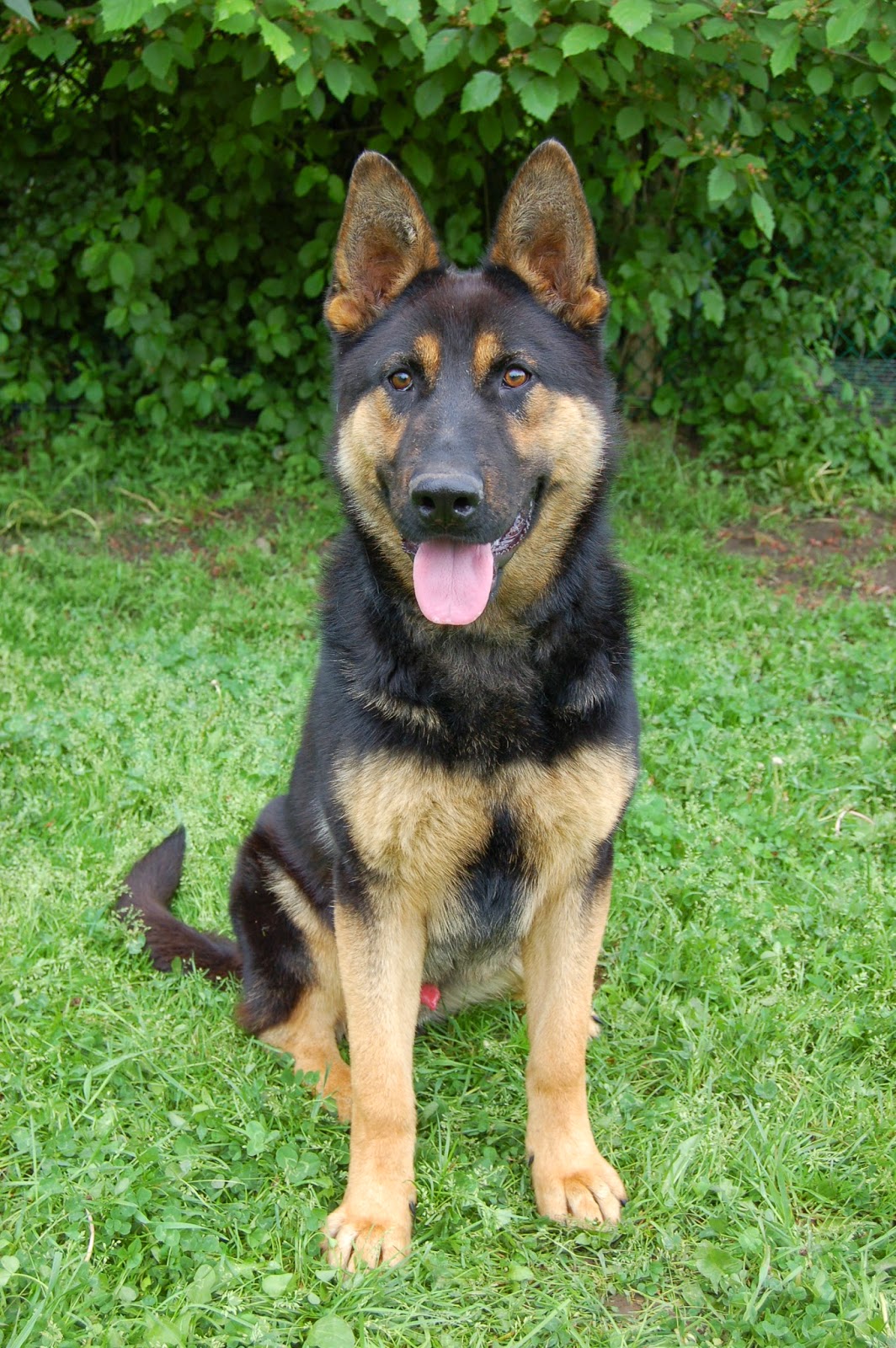
German Shepherd
Belgian Malinois
Dutch Shepherd

What Makes a Good Guard Dog?


Though the three breeds mentioned above make for good candidates when considering guard dogs, it would be unwise to assume that all dogs from these breeds would make good guard dogs. Just like humans, one dog is different from another. Selecting a dog that will be appropriate for the job will depend on that very specific dog. However, good genetic makeup is the first step to a well-trained guard dog. German Shepherds, Belgian Malinois dogs, and Dutch Shepherds have bloodlines that humans have tinkered with for a long time, leading to their possessing the best bloodlines for the job. To read more visit,

Friday, April 17, 2015

Protection Dogs and DNA Testing

Why DNA Testing?
Owners of personal protection dogs may be proud of the breed of their dog; however, in many cases they do not know exactly what breed it is. Knowing the breed of your dog is very useful in the long run. If you are not completely certain what breed your dog is, try DNA testing. It is easy and the process does not take too long.

What is DNA Testing?

As mentioned above, DNA testing is important. For a dog’s DNA test,
A small tissue/saliva sample is taken – this will contain blood or skin cells 
Genetic profile is run – this will determine the DNA of your dog
Comparison with other profiles of known dog breeds – this will ascertain       which breed your dog belongs to.

It is a simple process and obtaining the sample from your dog is very easy while at home. Once you send it off to a lab, you just have to await the results. Even simpler is doing the DNA test at home, using a home kit. Many vets and breeders use them since these kits are the result of strict tests and are monitored to ensure you get a high quality product that gives you accurate results. They are a cheaper alternative to sending your dog’s samples to the vet’s office. There is also the added advantage of reducing your pet’s stress level when you do it at home.

Is DNA testing accurate?

This is the question that jumps to most people’s mind – yes, it is easy and simple, but is DNA testing even accurate? Several factors can affect the accuracy of a DNA test and subsequent results. The first and foremost is how you collect the actual sample. Before you get started, read the instructions very carefully so that you do not end up with a sample that does not contain enough DNA. 

The Final Verdict on DNA Testing

Should you get your dog’s DNA tested or not? It is really up to you. If as a dog owner, you do not care what breed your pet is, then do not have them tested. It is important to keep in mind, however, that with guard dogs, the breed of the dog really matters; same is the case with protection dogs. This is because not all breeds meet the protection dog requirements, including strong nerves, better instincts, courage, and various other factors. 

What to Do Next

If you have made up your mind to get a DNA test done on your guard dog, then on your next visit, ask the vet any questions that come to your mind regarding this matter. Your vet will provide you with some helpful hints, as well as recommend brands that give accurate results.


At CCPD, we take pride in providing our customers with purebred German Shepherd, Dutch Shepherd, and Belgian Malinois personal protection dogs. However, that is not always the case when you buy a dog from somewhere else. Your family’s personal dog might not be the breed you think it is when you bought it. A DNA test can help you solve this mystery. To read more visit, www.ccprotectiondogs.com

Tuesday, April 7, 2015

Pit Bull Good Protection Dogs?

Pit Bulls are of the most ferocious and toughest dog breeds in the world, so many people wonder why they aren’t used as elite protection dogs. Especially since they are so strong, agile, and aggressive. While its true that pit bulls are athletic dogs that can both inflict and withstand a lot of pain, they are simply too unpredictable to be trained as elite protection dogs.

There are many pit bulls that make great family pets and guard dogs . These dogs are lucky enough to have very caring owners who take the time to train and socialize them properly. However, more often than not, pit bulls are not
trained and the animal reverts to its instinctive aggressive nature. Sometimes these untrained dogs attack neighbors, other animals, or even newborn infants.

Pit bulls were bred for centuries to be used in dog fighting and bull baiting, and only with extensive, proper training, can this tendency for violence be controlled. Unfortunately, many pit bull owners don’t bother with training, or even worse, they encourage the aggressive behavior. Pit bulls are found in animal       shelters across the country because of lazy or uninformed owners.

Pit bulls do make excellent guard dogs, and can be used for basic protection of your home and property. Many pit bulls will instinctively attack an intruder, and the mere sight of a pit bull is often enough to scare away criminals. Some pit bulls can be even trained to attack on command, but the consistency of attack and release can be sketchy. Put simply, they are highly trainable, yet have been known to
sometimes rebel. German Shepherd puppies and Belgian Malinois, on the other hand, are consistent, predictable, and make perfect elite protection dogs.To learn more visit  www.ccprotectiondogs.com
  

Tuesday, March 31, 2015

Five Question About Getting A Protection Dog Answered


The world as we know it today is a dangerous place. Crime levels are soaring and in particular property crime statistics including burglary means it's hard to feel safe in our own homes. But if your home is your castle where you retreat from the strains and stresses of the world around you, you need to feel secure, and more importantly, you need to make sure you don’t become a crime statistic.

And fair enough, all homeowners take certain precautions to make their home less of a target for criminals. Some make their home look like someone is in it at all times. Some fit doors and windows with high security locks. Some even go as far as investing in a bunch of hi-tech gadgets including fancy alarm systems, CCTV and electronic access control systems to make it as hard as possible for outsiders to gain entry into their property. The truth is: These are all viable security solutions but nothing beats the very real, very visible and very effective deterrent that a protection dog can be. Protection dogs also offer the unique advantage of not only detecting disturbance but also acting upon it, selflessly defending their charge against potential threats and assailants.

If you are in the market for a protection dog, you probably have a lot of questions. Let’s answer some of them. Perhaps the most important question is the following:


- Why do I need a protection dog?

An extension of the above, a protection dog can provide you with the greatest peace of mind. If you have been a victim of burglary or you have a neighbor or acquaintance who has been a victim, you would know that having your home invaded can be deeply upsetting. A protection dog is very real deterrent for criminals with the right confidence and skill set to defend your home and family against cunning crooks should they somehow gain access to your property. In essence, a protection dog is at the same time the best companion you can hope for and a sword by your side.


Other pertinent questions include:

- How do I choose a protection dog?

Not all protection dogs are trained equal, and not all breeds share the same characteristics. If you are thinking about getting a protection dog, dog breed is an important consideration. Individual dog breeds can be compared to one another in terms of size, trainability, barking level and grooming needs among other things. The German Shepherd, for instance, is an energetic, strong, confident and smart well-muscled animal. These big guys were born to work and therefore require lots of mental and physical exercise. They also have a very good ability to assimilate and retain training. Another dog breed that makes the perfect loyal companion and protection dog is the Belgian Malinois. A high-energy worker and well-muscled animal that’s more elegant than bulky, the Belgian Malinois has long been used as both a police and military working dog.


- Does personality and temperament matter?

Depending on your lifestyle, one dog breed may make more sense for you than another. In particular, you need to consider how similar and different you are to your favorite dog breed in terms of energy, cleanliness, sociability, independence, trainability and playfulness.


- Can I trust a protection dog around my children?

In Dogdom, aggression is not the preferred course of action. Dogs only feel inclined to attack each other and humans alike if they feel a threat to themselves, their pack, or their territory. If you choose a well-bred dog, the animal will not be a problem around kids. The key is early socialization and exposure in order for the canine to fit in our home and world better. A well trained dog can go on to become your child’s best friend and most loyal companion, developing a very special bond over time. Supervision, of course, is important.


- What kind of training do protection dogs need? What else do I need to know?

And finally, getting a protection dog comes with certain responsibilities. For instance, the canine needs to be expertly trained using a combination of communication, direction and correction training to develop the confidence and right skill set to be an integral part of your family as well as a weapon by your side to defend your home, business and/or loved ones against criminals and cunning crooks. Protection dogs also require care in terms of nutrition and feeding, coat and grooming, exercise as well as veterinary and health care.

For more information go to  www.ccprotectiondogs.com

Friday, March 13, 2015

The Bullmastiff as a Guard Dog

The Bullmastiff is a large and powerful breed with a muscular build. It is a molosser type breed, and came about as a cross between the English Mastiff and the Old English Bulldog. The head and muzzle are broad and relatively square. The ears naturally fold downwards, and are usually left as-is. Cropping of the ears occurs rarely, if at all. The coat is short and fine, with fawn, red and brindle being the most common color variations. White markings are sometimes seen on the chest.

The Bullmastiff temperament is usually described as independent, calm, and docile. They are not generally aggressive, and are mostly friendly towards humans and other dogs. In comparison with other breeds, they do not bark often, but may bark on alarm. Several health problems are common among the breed, with hip dysplasia being the most common due to the dog's size. Hip dysplasia occurs in approximately one quarter of all Bullmastiffs.

The Bullmastiff was originally bred in England during the late 1700's to early 1800's. Their original purpose was to help guard the estates of gamekeepers. They were trained to tackle and hold down intruding poachers, but were not trained to bite them. Both their large size and gentle temperament reflect this. Today, their large and lovable nature lends itself well to life as a family pet. Despite originally being bred as a guard dog, they are not usually used for that purpose today. Though their large size is intimidating, they do not have the nerves or temperament required of  protection dogs today. More common working breeds such as the German Shepherd, Belgian Malinois or Dutch Shepherd are better suited to guard work, while the Bullmastiff is best left as a pet or companion dog. To learn more vist, www.ccprotectiondogs.com

Friday, February 27, 2015

Do You Need A Protection Dog?


Perhaps the best way to answer this question is to look at some statistics. Let’s talk about the crime rates for the most populous U.S. state - California. Currently home to a little over 38 million people, California has a total annual crime rate of 1,173,036 of which 1,018,907 are property crimes and 154,129 are violent crimes. This makes the annual property offense rate for the state 26.58 per 1,000 residents. With statistics like these true for California, many other cities and states across the United States and possibly worldwide, fear of crime is soaring and it’s getting progressively hard to feel safe in our own houses.

Property offenses including burglary are despicable crimes. Sure having a thief rob you of a valuable possession is bad but perhaps the worse is the emotional shock of having your home violated. After all, it’s the one place in the world where you should be able to put your feet up, retreat from the stresses of the world and most importantly feel safe.

 So what do you do? If your home is your castle and your family is the most precious thing to you, you better protect them both if you don’t want to contribute to an escalation of the aforementioned crime statistics? And indeed, we all take the basic precautions. We make it as hard as possible for unwanted people to invade our property and harm us. Some of us even invest in a few fancy crime-busting gadgets such as surveillance cameras, infrared detectors and sturdy doors, windows and gates. The sad thing though is that, sometimes, even all these things put together fall short. And once someone gains access to your home despite the high security doors and hi-tech cameras, there is little these gadgets can do to protect you against your assailant(s). And police response times even if you manage to get a call out in time are not always the most reliable.

 In the light of these facts, protections dogs make the perfect sword by your side. For a start, a canine represents a big obstacle for anyone thinking of breaking into your property. Protections dogs are therefore very real and very visual deterrents but in contrast to cameras, alarm systems and infrared detectors, they are also trained and have the skill set and confidence to defend their charge against potential assailants.

 But that’s not all. Sure protection dogs are an excellent security choice. After all, the physical presence of a German Shepherd or Belgian Malinois, for example, will make a potential thief or criminal think twice before coming your way. They also have the physical capability to take on an attacker. However the canines also make wonderful companions and truly great additions to any family. For instance:

 
1. Your days as a lone wolf are over

 Protections dogs make the best companions so once a canine crosses the threshold of your home, you can say goodbye to loneliness. You will have a loyal friend and confidant through thick and think.

 
2. Canines are fun

If you’re getting a protection dog, you might also want to invest in a camera for you will have at least a dozen moments worth capturing everyday. Dogs are fun, quirky and incredibly entertaining companions. As a matter of fact, some studies even suggest that dog owners experience less stress. They find more joy in life and reduce their risk for heart diseases.

 
3. Everyday is an adventure

 With a canine companion, you kiss boredom goodbye for everyday is an adventure. You will also have the best pal should you want to go hiking, sailing or join a search and rescue team.

 
4. The key to social stardom

 Dogs love walks and when you take your dog out for some quality time in the open and his daily activities, inevitably, you meet other people doing the exact same thing paving the path for new friendships. For more information on protection dogs, visit http://www.ccprotectiondogs.com/


Sunday, February 22, 2015

Guard Dogs Explained

One of our recent clients is the owner of a small computer shop in a very nice part of California. She called me after having her shop broken into after hours, resulting in the loss of thousands of dollars of equipment as well as a broken back door. Her alarm system did not deter the person or persons who broke in. We were happy to help and after determining her needs and evaluating her situation we delivered a balanced, strong nerved guard dog.

A few weeks ago I posted a blog called “Guard Dogs: Defined”. The flood of calls and emails I received surprised me! Obviously, there is a void in the amount of information available on this topic. I’m happy about such a positive response and would like to address some of thequestions in case anyone else is wondering about the same thing. Businesses, especially businesses with valuable inventory, use guard dogs as an alarm system.

 It would take a very stupid burglar to break into your business after hearing the serious bark of a guard dog on the other side of the door. Their most likely response is to skip your business all together and move on to a locality that presents less obstacles (such as a huge, snarling, barking and possibly hungry German shepherd who has been awoken from a sound sleep). They are also used to protect outdoor assets, such as in a fenced construction site. AsI have said before, beyond training and genetics, balance is part of what sets a guard dog apart from an elite personal protection dog. Guard dogs lack the social

skills and perfect manners that a protection dog is genetically equipped and trained to have. They are highly territorial and trained to protect their (really your) space. Protection dogs specifically protect YOU and your family though part of this includes eliminating threats in your environment. For instance, if someone were to break into your house as you slept, the dog would prevent the opportunity to harm you.
My client who owned the computer shop was under the impression that a personal protection dog was the best choice for her. However, she didn’t personally feel threatened, it was her business she was worried about. There is a large price difference between a guard and personal protection dog. While Protection Dogs run between $35K to $85K and above, a guard dog only costs about $3,500-$8,500. I did not want my client to incur the extra expensive so after explaining the difference she happily took delivery of a Guard dog. In fact, she said her dog cost less than the security alarm system she had installed!

It is possible to rent a guard dog though for most home and business owners this is a much costlier way to go. It does provide a good solution if you have a short-term situation but if you want to protect your business for an extended length of time,buying is definitely the way to go. Most businesses have worked the numbers and are increasingly purchasing dogs rather then subcontracting with a security company.


Additionally, rented guard dogs always come with a patrol officer. This really drives up the cost. Whenever I’m consulting with a client I’m always upfront about the rental alternative. We do not rent dogs, they are only available for purchase at CC Protection Dogs, but I want our clients to know every option.
Another consideration is the environment that the dog will be guarding. It is important that much thought is put into potential dangers for the dog itself. Automotive shops, for example, need to ensure that anti-freeze or other chemicals aren’t lying in the open. If the dog will live outdoors, a doghouse needs to be stationed to protect and keep the dog warm. Guard dogs are known for their toughness but have needs like any other dog.

 We specialize in training elite personal protection dogs. However, given the state of the economy and rising crime, we are increasingly asked to provide guard dogs. We put a lot of effort into training or locating Guard Dogs that have balance. After all, our clients are paying for dogs that are obedient and present less liability. Otherwise, they would just pick up an aggressive dog from the local pound.

So know the difference and assess your needs. We ask A LOT of questions in order to determine what is the best fit for you and your Family. To read more go to, www.ccprotectiondogs.com